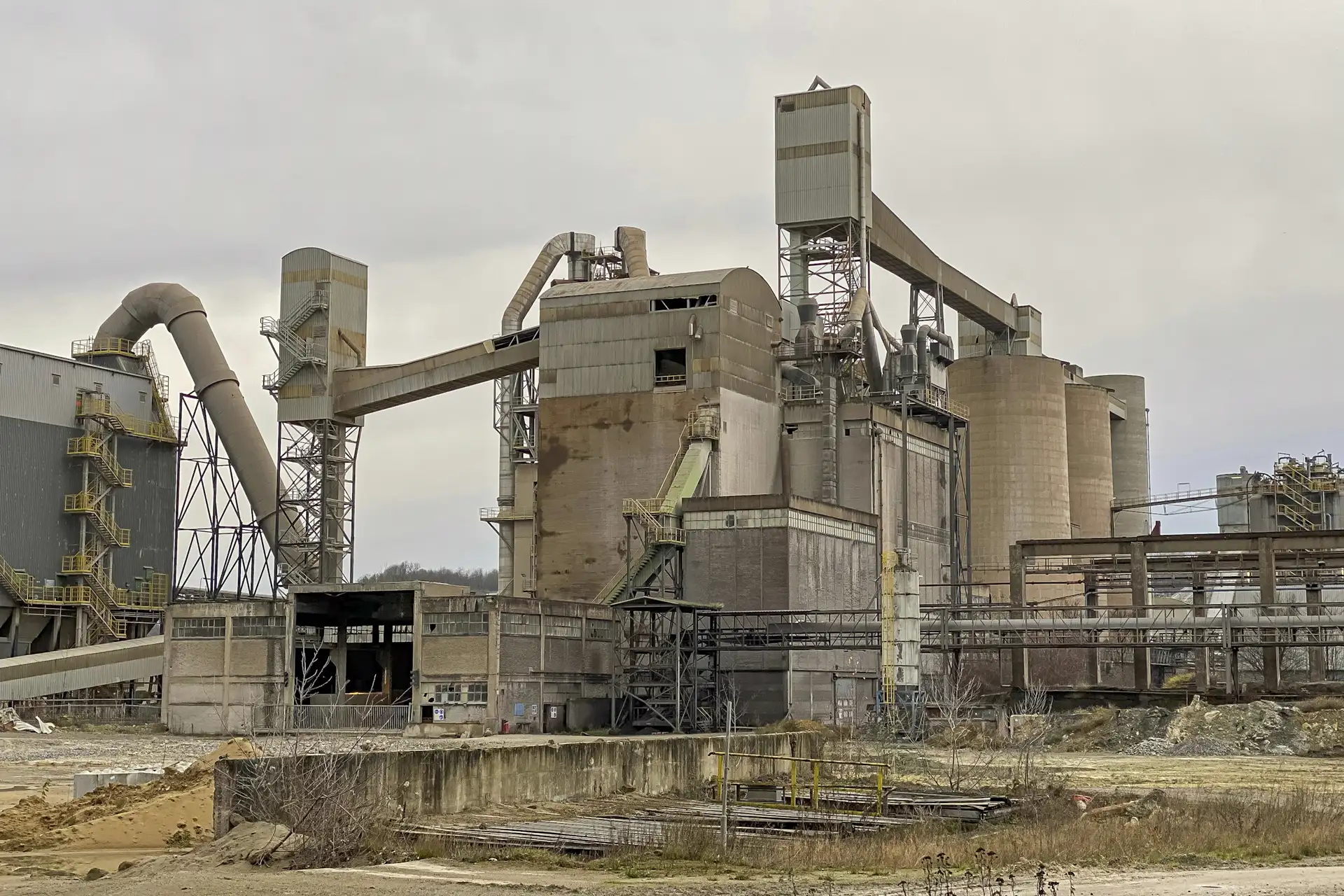
Around the kiln, every shutdown is prepared well before it begins.
Crushing, raw milling, rotary kiln firing, clinker cooling, cement grinding, dispatch: equipment works in dust, abrasion and heat. Lime and aggregate plants share some of these machines. MatxFlow helps track work orders across the whole line and prepare shutdowns with the history of each piece of equipment.
What makes maintenance difficult in a cement plant.
- 01
A kiln that drives the whole plant
When the kiln line stops, clinker production stops too. Work on the kiln, the preheater tower and the cooler is grouped and prepared ahead of shutdowns.
- 02
Abrasion, dust and heat
Abrasive materials, fine dust and high temperatures wear out liners, linings, belts and bearings. The same wear parts come up again and again in work orders.
- 03
A large site on several levels
Quarry, crushing, storage halls, preheater tower, grinding units and dispatch: technicians work across a wide area, often at height.
- 04
Shutdowns that must be prepared precisely
Replacing a refractory lining or mill liners mobilizes in-house teams and contractors for a limited time. A forgotten task may have to wait for the next shutdown.
The equipment your teams look after every day.
Every work order is linked to a piece of equipment. Its history builds up with each job carried out.
- Crushing and pre-blendingCrushers, stackers, reclaimers and wear parts.
- Raw and cement millsBall or vertical mills, separators and drives.
- Preheater tower and rotary kilnCyclones, shell, tires, support rollers and refractory lining.
- Clinker coolerGrates, cooling fans and clinker crusher.
- Fans and dust collectionInduced draft fans, bag filters and electrostatic precipitators.
- Conveying and dispatchBucket elevators, air slides, conveyors and bagging machines.
How the team uses MatxFlow.
For each situation: what the team does in MatxFlow and what it can find afterwards.
A kiln shutdown is planned.
The work planned on the kiln, the cooler and the fans is scheduled and assigned to teams and contractors before the shutdown.
The list of shutdown tasks, with who is responsible for each.
Mill liners are being replaced.
A form guides the technician: condition found, thickness readings, photos and validation.
Readings that can be compared from one replacement to the next.
An induced draft fan is vibrating again.
The equipment history brings together work orders, recorded readings and previous findings.
Repeat occurrences and the actions already tried.
The equipment list is kept in a spreadsheet.
Where Excel import is available for this data, it avoids retyping everything; export then lets you analyze work orders in Excel.
A start based on your current files.
One work order, from report to history.
A typical scenario, as it can be tracked in MatxFlow.
- 01
The control room reports an abnormal temperature on a cooler bearing.
- 02
The request is linked to the cooler, qualified and assigned to the mechanical team.
- 03
The technician carries out the work, takes readings and photographs the bearing.
- 04
The action taken and the condition of the equipment are recorded at closure.
- 05
The item stays visible in the history to prepare the next shutdown.
Recorded data, indicators and analysis.
An indicator is only as good as the information entered in the field. What is recorded in MatxFlow, what can be calculated from it, and what requires other sources:
Information recorded
Entered with requests and work orders.
- Work orders per area: raw mill, kiln, cement mill, dispatch
- Recorded thickness, temperature and vibration readings
- Photos of parts before and after replacement
- Completion dates and people involved
Tracking indicators
Can be calculated from the recorded data, in MatxFlow or after an export.
- Number of work orders per piece of equipment and per area
- Tasks completed and remaining for a planned shutdown
- MTTR and MTBF, when failure and return-to-service dates are recorded
Further analysis
Requires data that MatxFlow does not record (costs, production, operations).
- Clinker production lost during shutdowns
- Continuously monitored kiln parameters
- Wear part consumption and cost
Scope: MatxFlow does not run the kiln line and does not replace the kiln control system: it organizes and documents maintenance work.
A demo built on the equipment of your kiln and grinding lines.
Tell us about your plant areas, your planned shutdowns and how your work orders are tracked today. We will show you how MatxFlow can structure this follow-up.