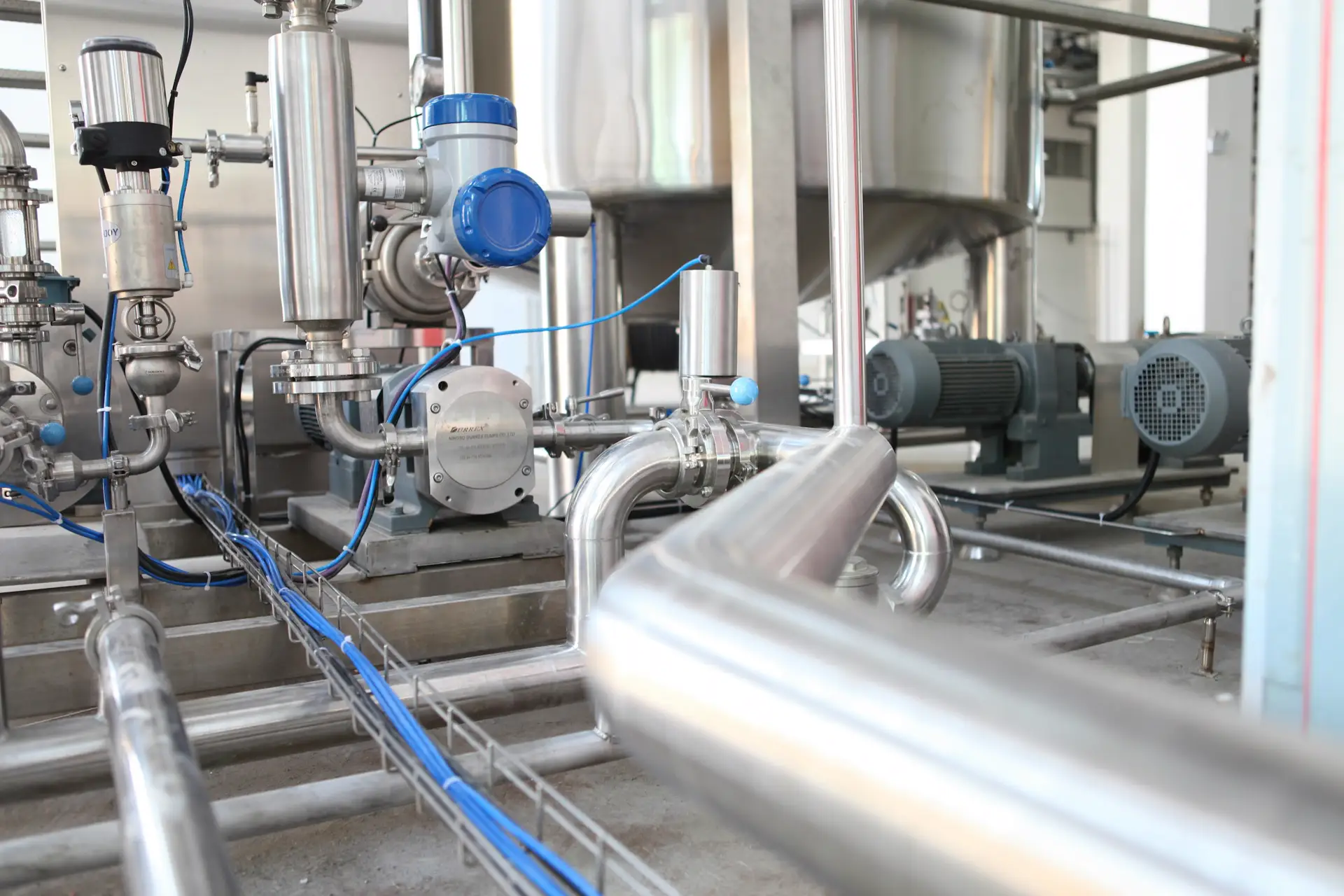
Reactors, pumps, heat exchangers: maintenance work prepared and traced.
Corrosive or hazardous products, pressure equipment, isolation required before any opening: in chemicals, every job is part of the site's safety procedures. MatxFlow documents the work itself (findings, measurements, photos, signature); isolation and lockout procedures remain those of the site.
What makes maintenance difficult in the chemical industry.
- 01
Making equipment safe before work
Before a pump or a reactor is opened, the equipment is isolated, drained and checked according to site procedures. These steps shape how the work unfolds.
- 02
Corrosion and sealing
Aggressive products and high temperatures put strain on mechanical seals, gaskets, piping and linings. The same failures can recur on a piece of equipment.
- 03
Work to group together
To limit isolations and restarts, major work is often grouped during planned shutdowns.
- 04
Reports that must be complete
An incomplete report means the work has to be reconstructed later. Information must be entered when it becomes known.
The equipment your teams look after every day.
Every work order is linked to a piece of equipment. Its history builds up with each job carried out.
- Reactors and agitated vesselsAgitators, seals, jackets and linings.
- PumpsCentrifugal pumps, magnetic drive pumps and metering pumps.
- Heat exchangersShell-and-tube or plate exchangers, fouling and sealing.
- Separation and dryingDistillation columns, filters, centrifuges and dryers.
- Piping and safety devicesValves, relief valves, rupture discs and supports.
- InstrumentationPressure, temperature and level sensors, and analyzers.
How the team uses MatxFlow.
For each situation: what the team does in MatxFlow and what it can find afterwards.
A leak is found on a metering pump seal.
The request is created on the pump, qualified and scheduled; the reference of the permit to work issued by the site can be noted in the work order.
The status of the request and its link to the site procedure.
The technician must record every step.
The form follows the sequence defined by the site: prior checks, findings, parts replaced, tests, with fields that only appear when an anomaly is found.
A complete report, structured the same way every time.
A heat exchanger fouls faster than expected.
Successive cleanings and their findings are grouped in the exchanger's history.
How often it is cleaned and the related observations.
A planned shutdown is being prepared.
The work to be done during the shutdown is scheduled and assigned to teams and contractors.
The list of shutdown tasks and their progress.
One work order, from report to history.
A typical scenario, as it can be tracked in MatxFlow.
- 01
An operator reports a leak on a transfer pump seal.
- 02
The request is qualified; the permit to work reference is noted in the work order.
- 03
Once the site has made the equipment safe, the technician replaces the seal and records the findings.
- 04
The return-to-service test and the outcome are recorded.
- 05
The work order joins the pump's history.
Recorded data, indicators and analysis.
An indicator is only as good as the information entered in the field. What is recorded in MatxFlow, what can be calculated from it, and what requires other sources:
Information recorded
Entered with requests and work orders.
- Work orders per unit and per piece of equipment
- Findings, parts replaced and return-to-service tests
- Permit to work references, when entered
- Photos, documents and validation signatures
Tracking indicators
Can be calculated from the recorded data, in MatxFlow or after an export.
- Number of work orders per piece of equipment
- Recurrence of failures on the same piece of equipment
- MTTR and MTBF, when the required dates are recorded
Further analysis
Requires data that MatxFlow does not record (costs, production, operations).
- Regulatory follow-up of pressure equipment
- Risk analyses and safety studies
- Process control data
Scope: MatxFlow does not manage permits to work or lockout/tagout, and does not replace the regulatory follow-up of pressure equipment: these remain governed by the site's procedures. MatxFlow documents the maintenance work carried out within them.
See how a work order is documented on a chemical site.
Tell us about your installations, your work procedures and your current tools. We will see how MatxFlow can fit in.