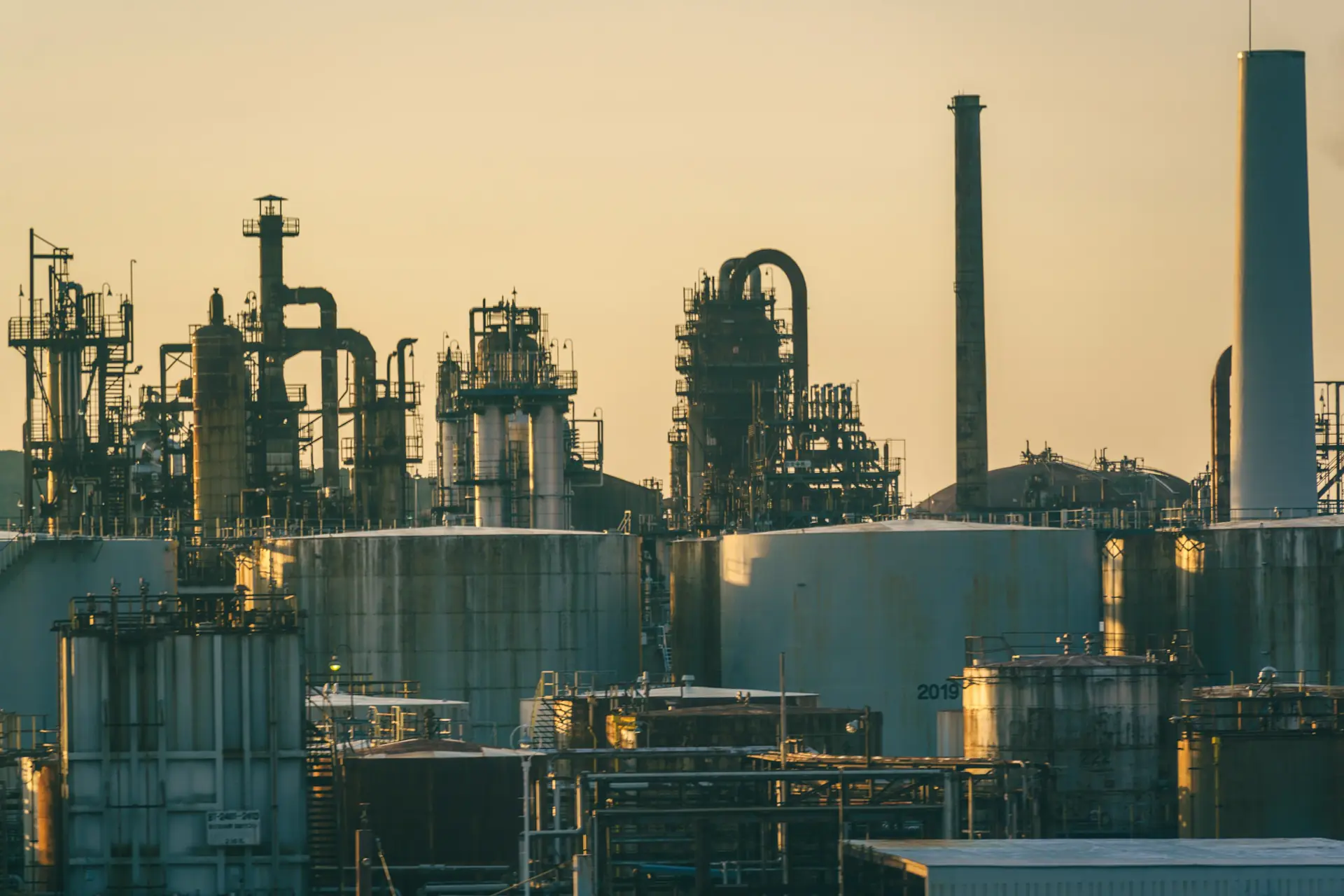
On an oil site, every maintenance job must leave a record.
Pumps, compressors, transfer lines, treatment units: equipment is numerous, spread out and often critical to site continuity. Every request is linked to the equipment concerned, and the history of a pump or compressor brings together all past work orders.
What makes maintenance difficult on an oil site.
- 01
Equipment critical to continuity
A pump or compressor going down can slow an entire circuit. You need to know quickly what happened, who is working on it and where the job stands.
- 02
Many people involved
In-house technicians, shift teams and contractors work on the same installations. Without shared tracking, information gets scattered.
- 03
History that is hard to rebuild
When reports stay in notebooks, emails or files, finding past work on a piece of equipment takes time.
- 04
Traceability is expected
Managers must be able to show what was done, when and by whom, on every piece of equipment.
The equipment your teams look after every day.
Every work order is linked to a piece of equipment. Its history builds up with each job carried out.
- Centrifugal and positive displacement pumpsFailures, corrective work and periodic tasks.
- CompressorsFindings, readings taken and actions carried out.
- Transfer equipmentValves, lines and loading arms.
- Treatment unitsSeparators, heat exchangers and related equipment.
- Motors and drivesMechanical and electrical work.
- Site instrumentationSensors, transmitters and measuring devices.
How the team uses MatxFlow.
For each situation: what the team does in MatxFlow and what it can find afterwards.
An anomaly is found on a compressor.
A request is created and linked to the equipment concerned, then qualified before it is scheduled.
The request, its status and the equipment concerned.
Several people are working on the same installation.
The work order is assigned to a technician, who records their actions from the field.
Who is working, on which equipment, and where the job stands.
The work has to be documented precisely.
A dedicated form guides the technician: readings, observations, photos, attached documents and a validation signature.
A structured report that can be compared from one job to the next.
A piece of equipment fails again.
The equipment history brings together past work orders and their outcomes.
Previous findings and the actions already taken.
One work order, from report to history.
A typical scenario, as it can be tracked in MatxFlow.
- 01
An operator reports a drop in flow on a transfer pump.
- 02
The request is qualified, linked to the pump and assigned to a technician.
- 03
The technician carries out the work, records the findings and attaches photos.
- 04
The outcome and the condition of the equipment are recorded at closure.
- 05
The maintenance manager finds the work order in the pump's history.
Recorded data, indicators and analysis.
An indicator is only as good as the information entered in the field. What is recorded in MatxFlow, what can be calculated from it, and what requires other sources:
Information recorded
Entered with requests and work orders.
- Requests and work orders per piece of equipment
- Findings, readings and photos from the field
- Assigned technicians and work dates
- Equipment condition at closure
Tracking indicators
Can be calculated from the recorded data, in MatxFlow or after an export.
- Number of work orders per piece of equipment
- Work order duration, based on the time recorded
- MTTR and MTBF, when failure and return-to-service dates are recorded
Further analysis
Requires data that MatxFlow does not record (costs, production, operations).
- Impact of downtime on production
- Full cost of maintenance work
- Cross-referencing with site operating data
Scope: MatxFlow tracks and documents maintenance work. Permits to work, safety procedures and regulatory inspections on your site remain managed by your dedicated tools and procedures; how they fit with MatxFlow can be discussed during the demo.
A demo built on your pumps, compressors and transfer lines.
Tell us about your equipment, your teams and the way you work today. We will show you the MatxFlow features that help you track your maintenance work.