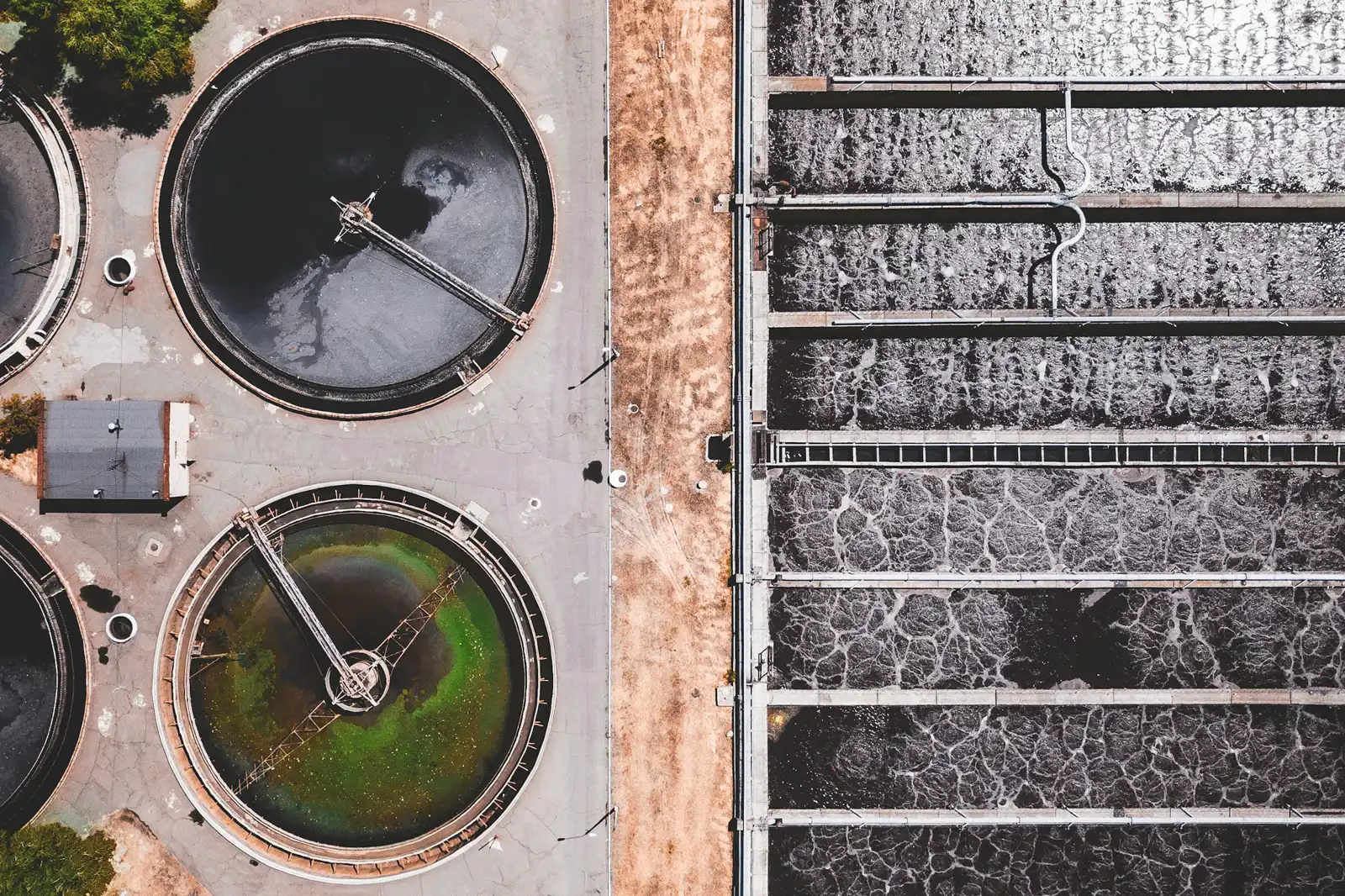
Dozens of sites, one question: what has been done?
Water intakes, drinking water plants, reservoirs, lift stations, wastewater treatment plants: equipment is spread across a territory and runs continuously. Visits and work orders are scheduled per technician, and each facility keeps the history of what was done there.
What makes maintenance difficult in water and wastewater.
- 01
Scattered sites
Lift stations and reservoirs are spread across the territory, sometimes far from the plant. Every visit must be recorded where it takes place.
- 02
A service that never stops
Pumps are often duplicated, but a failed pump reduces the backup margin until it is repaired.
- 03
Pumps prone to clogging
In wastewater, wipes and rags can block pumps and lead to repeated work on the same stations.
- 04
On-call work
Night and weekend work must leave a record the day team can use.
The equipment your teams look after every day.
Every work order is linked to a piece of equipment. Its history builds up with each job carried out.
- Lift stationsSubmersible pumps, check valves, valves and level sensors.
- Pumping and booster stationsPump sets, variable speed drives and surge tanks.
- Preliminary treatmentScreens, grit and grease removal.
- Biological treatment and aerationBlowers, diffusers, mixers and clarifiers.
- Filtration and disinfectionSand filters, membranes, UV reactors and chlorination.
- Sludge treatmentThickeners, centrifuges, filter presses and sludge pumps.
How the team uses MatxFlow.
For each situation: what the team does in MatxFlow and what it can find afterwards.
A lift station goes into fault during the night.
The on-call technician records the work on the station concerned: finding, action taken, photos.
A report available to the morning team.
The same pumps clog regularly.
Every unclogging is linked to the pump and its station, in their history.
The stations and pumps that come up most often.
A series of visits is planned across several sites.
Work orders are scheduled per site and assigned; a visit form lists the points to check.
The visits completed and those still to do.
The list of sites already exists in a spreadsheet.
Where Excel import is available for this data, it lets you reuse what you have rather than retyping everything.
A start based on your current data.
One work order, from report to history.
A typical scenario, as it can be tracked in MatxFlow.
- 01
The operator reports a high level at a lift station.
- 02
The request is created on the station and assigned to the on-call technician.
- 03
On site, the technician unclogs the pump and records the finding with photos.
- 04
The return to service and the condition of the station are recorded.
- 05
The work order joins the history of the station and the pump.
Recorded data, indicators and analysis.
An indicator is only as good as the information entered in the field. What is recorded in MatxFlow, what can be calculated from it, and what requires other sources:
Information recorded
Entered with requests and work orders.
- Work orders per site and per piece of equipment
- Visits and inspections carried out
- Findings, photos and recorded readings
- On-call work orders and their times
Tracking indicators
Can be calculated from the recorded data, in MatxFlow or after an export.
- Number of work orders per station and per pump
- Visits completed against the schedule
- Handling times, when the dates are recorded
Further analysis
Requires data that MatxFlow does not record (costs, production, operations).
- Telemetry alarms and data
- Volumes produced or treated
- Regulatory water quality indicators
Scope: MatxFlow is not a telemetry system: it does not receive alarms directly from the stations. It is used to organize, document and retrieve the maintenance work that follows.
See how visits are scheduled and how your facilities keep their history.
Tell us about your sites, your equipment and how your on-call duty is organized. We will see how to structure the tracking of your work orders.