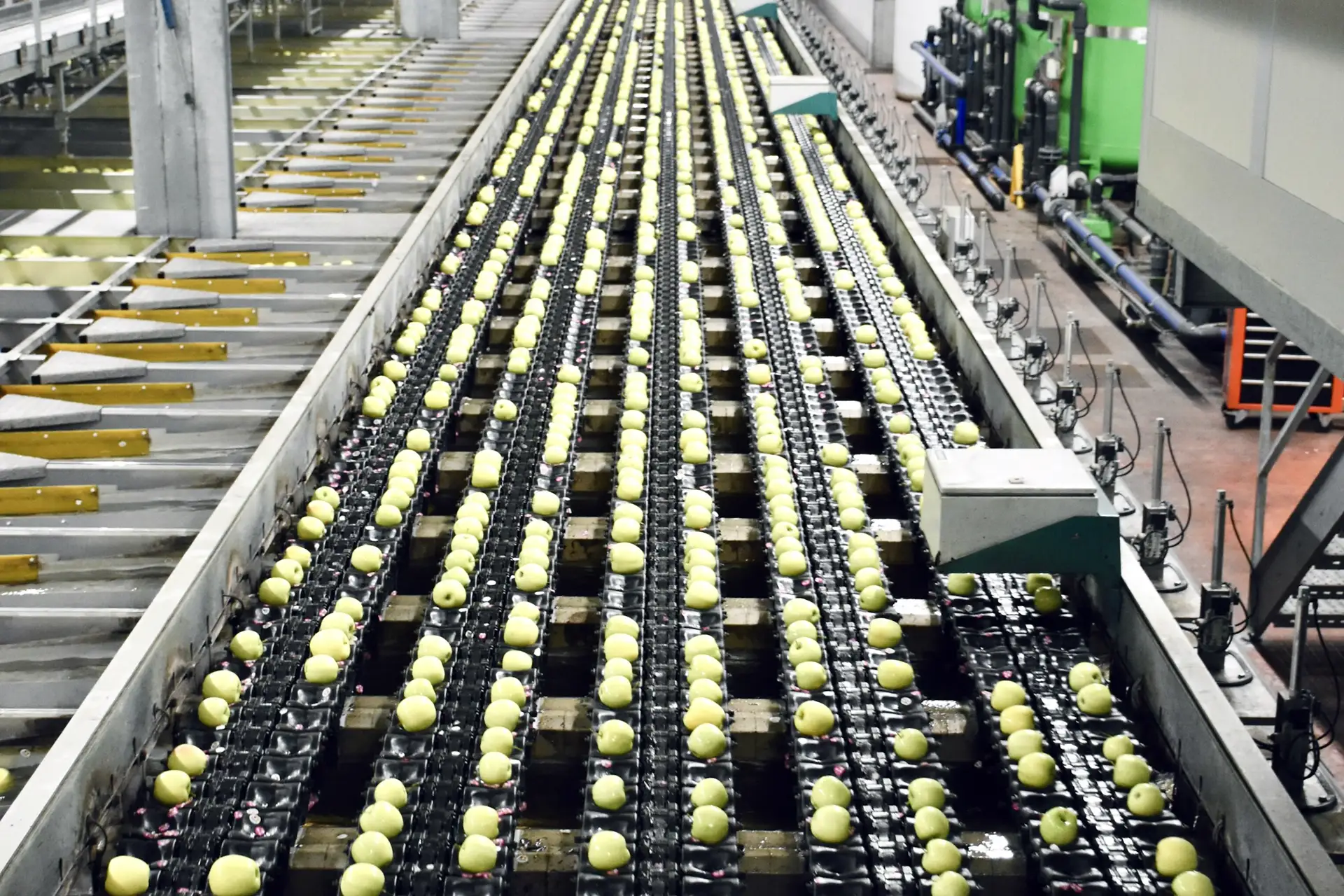
In food processing, a maintenance job ends when the area is ready to produce.
Mixers, cookers, pasteurization heat exchangers, freezing tunnels, packaging lines: equipment must stay available, clean and well maintained. The manager schedules work for the dates when the line is stopped, and the handover of the equipment is recorded at the end of each work order.
What makes maintenance difficult in food processing.
- 01
Hygiene is part of the job
In a production area, replacing a part is not enough: tools removed, area cleaned and absence of foreign bodies checked before restart, according to site rules.
- 02
Windows set by production
Maintenance work fits between campaigns, product changeovers and cleaning. It must be ready when the window opens.
- 03
Refrigeration can't wait
A breakdown in a cold room, a freezing tunnel or a refrigeration unit can put stored products at risk. Information must reach the right person quickly.
- 04
Equipment washed very often
Frequent washdowns, cleaning agents and humidity put strain on bearings, seals, motors and sensors.
The equipment your teams look after every day.
Every work order is linked to a piece of equipment. Its history builds up with each job carried out.
- Preparation equipmentMixers, grinders, dosing units and preparation tanks.
- Cooking and heat treatmentCookers, ovens, fryers and autoclaves.
- Pasteurization and heat exchangePlate or tubular heat exchangers, pumps and valves.
- Refrigeration generation and distributionCompressors, condensers, evaporators, cold rooms and tunnels.
- Packaging linesFillers, thermoformers, tray sealers and checkweighers.
- Boiler house and process fluidsSteam boilers, compressed air and process water.
How the team uses MatxFlow.
For each situation: what the team does in MatxFlow and what it can find afterwards.
A tray sealer stops in the middle of production.
The line operator creates the request on the machine; it is qualified and assigned to the available technician.
When it was reported, the machine and the progress of the work.
The job must end with hygiene checks.
The form lists the items to tick before handing the equipment back, as defined by your site, and ends with a validation signature.
A documented handover for every work order.
A refrigeration unit shows repeated faults.
Every work order is linked to the unit and kept in its history, with the readings recorded.
How often faults occur and the actions already taken.
Preventive tasks must fit into line stoppages.
Work orders are scheduled and assigned in advance, so they are ready when the stoppage begins.
What is planned for each stoppage and what has been done.
One work order, from report to history.
A typical scenario, as it can be tracked in MatxFlow.
- 01
A tray sealing defect is reported on a tray sealer.
- 02
The request is linked to the machine, qualified and assigned.
- 03
The technician replaces the part and records the findings and the part used.
- 04
They tick the checks required before restart and sign off.
- 05
The work order joins the tray sealer's history.
Recorded data, indicators and analysis.
An indicator is only as good as the information entered in the field. What is recorded in MatxFlow, what can be calculated from it, and what requires other sources:
Information recorded
Entered with requests and work orders.
- Stoppages and faults per line and per machine
- Checks carried out before handover to production
- Parts replaced, when they are recorded
- Recorded work order time
Tracking indicators
Can be calculated from the recorded data, in MatxFlow or after an export.
- Number of work orders per line and per machine
- Split between corrective and preventive work, when work orders are categorized
- MTTR and MTBF, when the required dates are recorded
Further analysis
Requires data that MatxFlow does not record (costs, production, operations).
- Continuous temperature logging
- Product losses due to breakdowns
- HACCP plan and batch traceability
Scope: MatxFlow documents maintenance work. The HACCP plan, batch traceability and temperature logging are handled by the site's quality tools; work order reports can complement those records.
See how work is scheduled around line stoppages.
Tell us about your lines, your hygiene rules and your maintenance windows. We will show you how to document your work orders with MatxFlow.