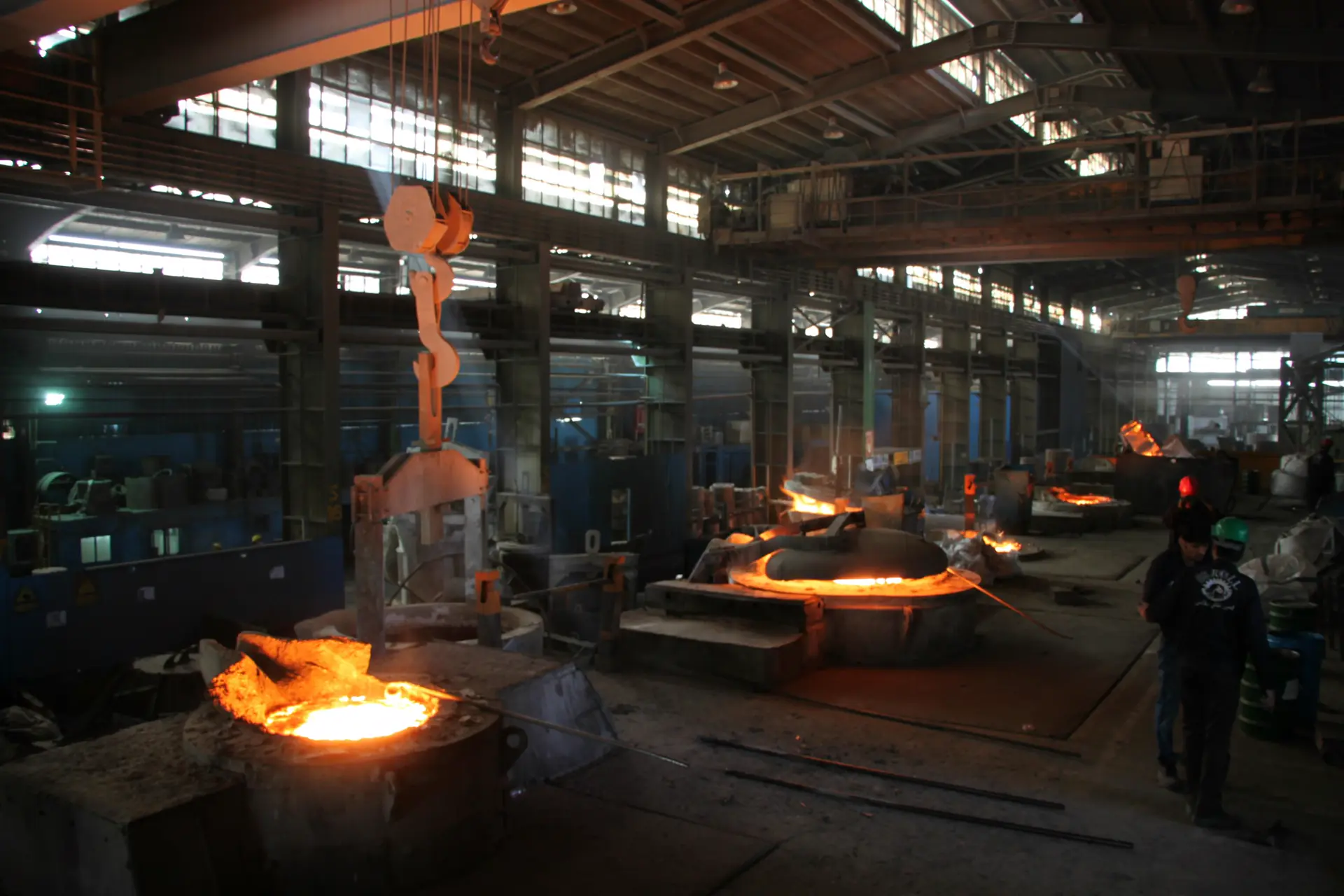
Equipment under heavy stress needs a history without gaps.
Heat, heavy loads, vibration: in metals processing, equipment wears quickly and failures tend to repeat. Each piece of equipment's history brings together its past work orders and stoppages, so a recurring failure shows up when you look at it.
What makes maintenance difficult in metals processing.
- 01
Heavy mechanical and thermal wear
Furnaces, rolls and lifting equipment are subject to stresses that speed up wear and multiply maintenance work.
- 02
Short planned shutdowns
Every shutdown counts: work orders must be prepared and assigned before it begins.
- 03
Shift teams
Teams take over from one another. Information from one shift must be available to the next.
- 04
Repeated failures
Without a consolidated history, the same breakdown can come back several times before its cause is addressed.
The equipment your teams look after every day.
Every work order is linked to a piece of equipment. Its history builds up with each job carried out.
- FurnacesReheating, melting and heat treatment.
- Rolling mills and standsRolls, guides and drives.
- Overhead cranes and liftingHoisting gear, brakes and runways.
- Motors and gearboxesVibration, overheating and replacements.
- Hydraulic circuitsLeaks, pressures and control components.
- Cooling systemsWater circuits, heat exchangers and pumps.
How the team uses MatxFlow.
For each situation: what the team does in MatxFlow and what it can find afterwards.
A planned shutdown is approaching.
Work orders are scheduled and assigned to technicians before the shutdown.
The list of planned tasks and who is responsible for each.
A night shift works on an overhead crane.
The technician records their actions and findings in the work order.
A report available to the next shift.
A gearbox shows the same fault again.
The equipment history shows previous work orders and their findings.
Repeat occurrences and the actions already taken.
The manager wants to know which equipment to watch first.
They rely on the work orders recorded for each piece of equipment.
The equipment that accounts for the most maintenance work.
One work order, from report to history.
A typical scenario, as it can be tracked in MatxFlow.
- 01
Abnormal vibration is reported on a rolling mill motor.
- 02
The request is qualified and scheduled for the next shutdown.
- 03
The technician carries out the work and records readings and observations.
- 04
The condition of the motor and the outcome of the work are recorded.
- 05
The manager compares it with previous work orders on that motor.
Recorded data, indicators and analysis.
An indicator is only as good as the information entered in the field. What is recorded in MatxFlow, what can be calculated from it, and what requires other sources:
Information recorded
Entered with requests and work orders.
- Work orders per piece of equipment and per team
- Readings, findings and photos
- Recorded failure and return-to-service dates
- Corrective actions carried out
Tracking indicators
Can be calculated from the recorded data, in MatxFlow or after an export.
- Number of work orders per piece of equipment
- Recurrence of work on the same piece of equipment
- MTTR and MTBF, when the required data is recorded
Further analysis
Requires data that MatxFlow does not record (costs, production, operations).
- Root cause analysis
- Impact of downtime on throughput
- Maintenance costs per installation
See the history of a piece of equipment that keeps failing.
Tell us about your installations, your planned shutdowns and how your teams are organized. We will show you the MatxFlow features suited to your operations.