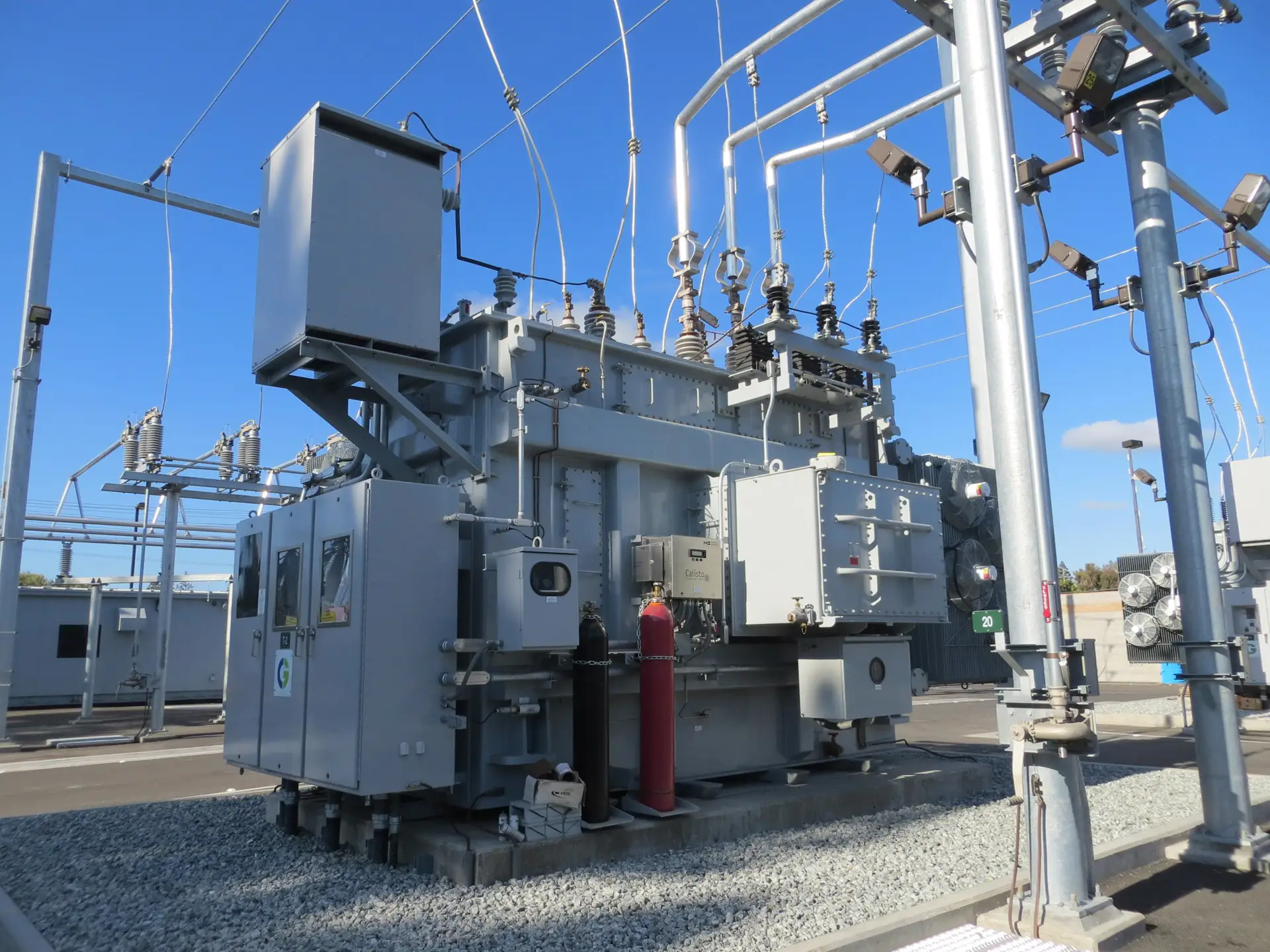
Power plants, standby generators, substations: every reading counts.
Thermal or hydro plant, generator fleet, solar installation: availability relies on equipment that is followed over time. Technicians' readings are entered in the work order forms and stay attached to the equipment from one visit to the next.
What makes maintenance difficult in power generation.
- 01
Equipment that must start at the right moment
A standby generator can sit idle for a long time and then have to start without delay. Its tests and routine servicing must be carried out and recorded.
- 02
Servicing driven by usage
For engines and turbines, many tasks depend on running hours or the number of starts, according to the manufacturer's recommendations. Readings must be reliable.
- 03
Distributed installations
Generators at remote sites, substations, small power plants: technicians travel and information must be recorded on the spot.
- 04
Overhauls to prepare
Turbine or alternator overhauls mobilize in-house teams and contractors within a limited window.
The equipment your teams look after every day.
Every work order is linked to a piece of equipment. Its history builds up with each job carried out.
- Generator setsEngine, alternator, cooling, fuel and starting batteries.
- TurbinesGas, steam or hydro turbines and their control components.
- AlternatorsBearings, cooling and excitation systems.
- Transformers and substationsPower transformers, switchgear, circuit breakers and protection.
- Plant auxiliariesPumps, fans, oil and cooling circuits.
- Inverters and storagePV inverters, uninterruptible power supplies and batteries.
How the team uses MatxFlow.
For each situation: what the team does in MatxFlow and what it can find afterwards.
A periodic test is scheduled on a standby generator.
The work order is scheduled and assigned; the form lists the points to check and the values read during the test.
A documented test that can be compared with previous ones.
The technician reads a generator's hour meter.
The value is entered in a numeric field of the form, along with the date of the work.
The hours read at each visit, in the generator's history.
An alternator overhaul is entrusted to a contractor.
The work order is scheduled with the people involved; findings, measurements and the contractor's report are attached.
The overhaul report linked to the equipment.
An anomaly is found during a substation visit.
The finding is recorded with photos, then a corrective work order is qualified and scheduled.
The finding and the work that followed, in the transformer's history.
One work order, from report to history.
A typical scenario, as it can be tracked in MatxFlow.
- 01
During a test, a generator set takes longer than expected to pick up load.
- 02
The technician creates a request linked to the generator; it is qualified and scheduled.
- 03
The work is carried out: checks, readings and replaced parts are recorded.
- 04
A new test is recorded before closure.
- 05
The generator's history brings together the anomaly, the work order and the validation test.
Recorded data, indicators and analysis.
An indicator is only as good as the information entered in the field. What is recorded in MatxFlow, what can be calculated from it, and what requires other sources:
Information recorded
Entered with requests and work orders.
- Tests, inspections and visits per piece of equipment
- Recorded running hours
- Attached contractor reports
- Completion dates and people involved
Tracking indicators
Can be calculated from the recorded data, in MatxFlow or after an export.
- Number of work orders per piece of equipment and per site
- Tests and visits completed against the schedule
- MTTR and MTBF, when the required dates are recorded
Further analysis
Requires data that MatxFlow does not record (costs, production, operations).
- Actual availability and output of the installations
- Real-time alarms and monitoring measurements
- Oil analyses and laboratory measurements
Scope: MatxFlow is neither a control system nor a monitoring system: it does not read meters and alarms directly from the installations. Useful values are entered by technicians, or exchanged with your systems where your architecture allows.
See how readings are recorded and how your assets keep their history.
Tell us about your sites, your equipment and your servicing intervals. Together we will see how MatxFlow can organize your work orders and readings.