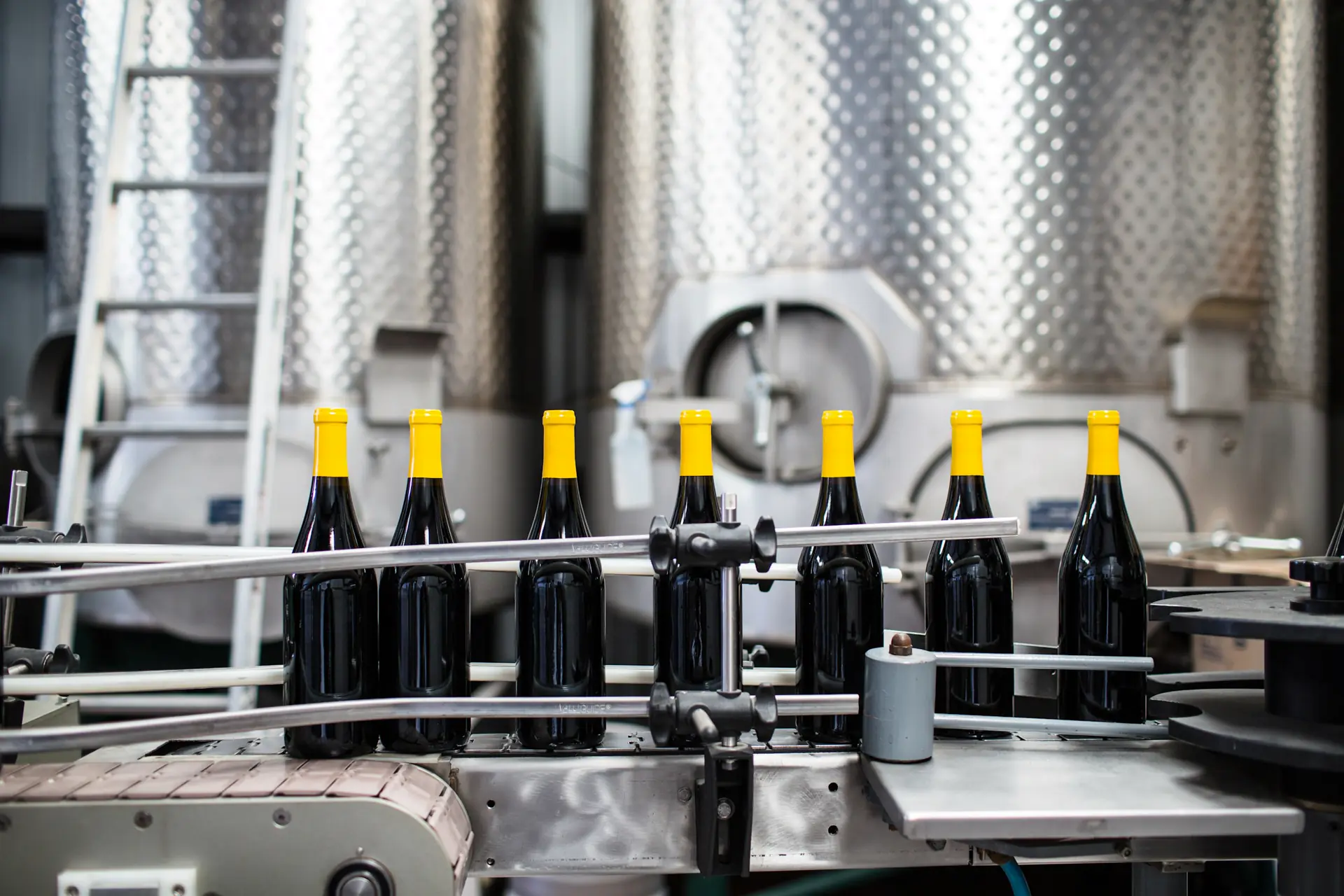
Packaging lines, tanks, utilities: follow every breakdown until it's back in service.
In brewing and beverages, production depends on equipment that runs continuously or in campaigns. In MatxFlow, each stoppage is linked to the ticket it concerns, with its reason, and the return to service is recorded when the equipment restarts.
What makes maintenance difficult in brewing and beverages.
- 01
Line stoppages that weigh on production
A fault on a labeler or a conveyor can bring an entire line to a halt. Information has to flow quickly between production and maintenance.
- 02
Production and maintenance to coordinate
Maintenance work is organized around production schedules, format changeovers and cleaning cycles.
- 03
Repeated failures that go unnoticed
Small, frequent stoppages are hard to spot without a consolidated history for each piece of equipment.
- 04
Essential utilities
Refrigeration, compressed air, steam and water treatment underpin the whole operation and need regular follow-up.
The equipment your teams look after every day.
Every work order is linked to a piece of equipment. Its history builds up with each job carried out.
- Fermentation and conditioning tanksWork orders, inspections and planned tasks.
- Bottling and canning linesStoppages, faults and adjustments.
- ConveyorsRecurring failures and component replacements.
- Packaging equipmentLabelers, case packers and palletizers.
- UtilitiesRefrigeration, compressed air and steam.
- Clean-in-place systemsTracking of work on cleaning circuits.
How the team uses MatxFlow.
For each situation: what the team does in MatxFlow and what it can find afterwards.
A fault is reported on the packaging line.
The request is created on the equipment concerned and sent to maintenance.
The report, the equipment and when the request was made.
Several requests come in at the same time.
Work orders are qualified, scheduled and assigned according to the team's priorities.
What is pending, in progress and completed.
The same conveyor keeps breaking down.
Every work order is kept in the equipment history.
How often work is needed and the actions already taken.
A preventive task is planned during a scheduled shutdown.
The work order is scheduled and documented with a suitable form.
The points checked and the technician's observations.
One work order, from report to history.
A typical scenario, as it can be tracked in MatxFlow.
- 01
A fault is reported on a packaging line.
- 02
The work order is qualified and assigned.
- 03
The technician carries out the work and records the information available.
- 04
The outcome is recorded in the equipment history.
- 05
The manager finds the information needed to follow up on maintenance.
Recorded data, indicators and analysis.
An indicator is only as good as the information entered in the field. What is recorded in MatxFlow, what can be calculated from it, and what requires other sources:
Information recorded
Entered with requests and work orders.
- Stoppages and faults reported per piece of equipment
- Actions carried out and observations
- Parts used, when they are recorded in the work order
- Recorded work order time
Tracking indicators
Can be calculated from the recorded data, in MatxFlow or after an export.
- Number of breakdowns per piece of equipment and per line
- Work order duration, based on the time recorded
- MTTR and MTBF, when the required dates are recorded
Further analysis
Requires data that MatxFlow does not record (costs, production, operations).
- Overall equipment effectiveness (OEE)
- Production losses due to downtime
- Maintenance costs per line
See how downtime and returns to service are tracked on your lines.
Tell us about your lines, your equipment and your main tracking difficulties. We will show you how to organize your maintenance work with MatxFlow.